 Learning |
To be an effective teacher in the year 2010 and beyond requires consideration of the teacher, the learner, learning and classroom processes. In this section we will discuss learning. "Teaching occurs only to the extent that learning occurs. Therefore, effective teaching rests heavily on consideration about how children learn" (Reys, Lindquist, Lambdin and Smith, 2009, p. 24). |
||||||||||||||||||||||||||||||
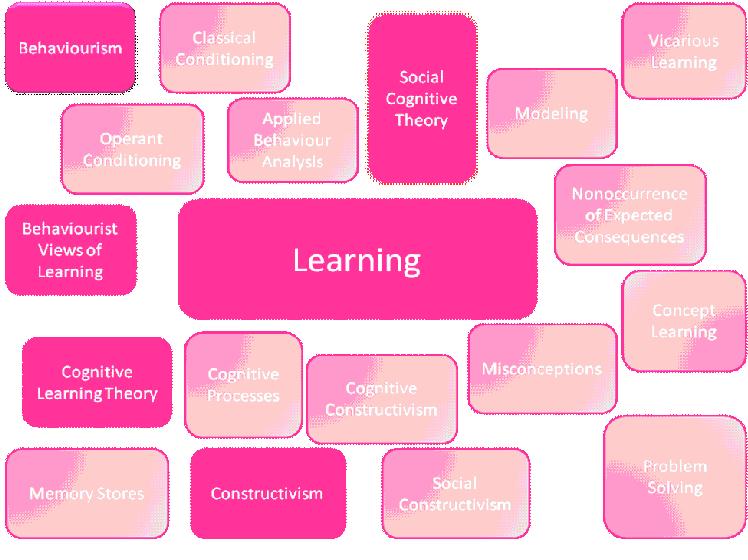 An important aspect of being an effective teacher in the year 2010 and beyond is having an understanding of how children learn and the different learning theories available, and understanding the learning theories requires knowledge of the theory, the ability to put the theory into practice and the competency to discern “which kinds of learning are most necessary in different contexts” (Shulman, 1992, as cited in InTime, 2001). “Learning is at the core of any study of educational psychology, and our goal as teachers is to promote as much learning as possible for all students” (Eggen & Kauchak, 29, p. 164).
Behaviourism:
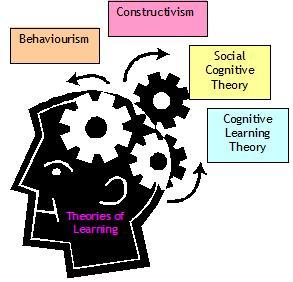
Behaviourism is a theory which “explains learning in terms of observable behaviours and how they’re influenced by stimuli from the environment” (Eggen & Kauchak, 2009, p. 164). Effective teachers can use their understanding of behaviourism to create positive learning environments and to encourage appropriate student behaviour, which in turn can increase learning and motivation. Social Cognitive Theory:Social cognitive theory is “a theory of learning that focuses on changes in behaviour that result from observing others” (Bandura, as cited in Eggen & Kauchak, 2009, p. 179). Effective teachers can use their understanding of social cognitive theory to model acceptable behaviours and attitudes towards learning, and to encourage self-regulation and responsibility.
Cognitive Learning Theory:Cognitive learning theory is a theory which “explain(s) learning in terms of changes in the mental structures and processes involved in acquiring, organising, and using knowledge” (Royer; Sawyer, as cited in Eggen & Kauchak, 2009, p. 196). Effective teachers can use their understanding of cognitive learning theory to attract and maintain attention, ensure accurate learner perception, promote encoding, and prevent interference to retrieval.
Constructivism:Constructivism is “a theory of learning suggesting that learners create their own knowledge of the topics they study rather than receiving that knowledge as transmitted to them by some other source, such as another person or something they read” (Bransford, Brown, & Cocking, as cited in Eggen & Kauchak, 2009, p. 226). Effective teachers can use their understanding of constructivism to provide an adequate representation of content to ensure correct construction of knowledge, to relate new knowledge to learners’ real world experiences, and to encourage cooperation and social learning in the classroom.
Source: Eggen & Kauchak, 2009, p. 247
In the Classroom
|
|||||||||||||||||||||||||||||||